One-to-one Qur'an, Tajweed & Arabic

Learn the Qur'an, properly corrected.

An online Islamic institute — one student, one teacher, taught the way it's been passed down since 2018 — from your very first letter through to reciting, memorising, and understanding the Book in its own language.

Ustādh Faris Sharif
Taught by Ustādh Faris Sharif — Hafidh of the Qur'an,
Diploma in Arabic Language Teaching, Umm Al-Qura University.

Jibreal, UK — learning to read from zero. In his own words, not a script. See why, specifically →

One-to-one, never groups — a real limit, not a marketing one UK · US · EU friendly times Beginners welcome No fixed price — trial lesson available

Not ready for lessons yet?

Start with Reconnect With The Qur'an — a free 7-page booklet for when you still believe, but feel far. Sent to your WhatsApp.

Get the free booklet

The path, in order

1

Qaidah An-Nooraniyah

The letters, then real reading confidence.

2

Qur'an Reading & Tajweed

Correct recitation, drilled letter by letter.

3

Hifdh & Arabic

Memorisation, and the language itself.

4

Revision & Fluency

Keeping it, for the rest of your life.

See the full curriculum

Real students, 6 countries — their own words

Finished Book 1 — Madinah Arabic ReaderFinished Sūrah al-Kahf — his first time everNow reads the Qur'an with real understandingReading with real confidence, starting from zero
Read all reviews →
Our programs

A path, not just a menu.


Every plan is one to one. How many lessons a week is entirely up to your schedule and budget, not ours. Most students follow this order — tell us where you're starting from.

Step 1For absolute beginners

Qaidah An-Nooraniyah

Starts at the letters and builds up. No shame in starting at zero — most students do.

  • 30-minute lessons, however often suits your schedule and budget
  • Practice assignments to work through before each lesson
  • Progress tracked by reading speed and accuracy

What free content misses

Free apps teach the letters. They can't hear that you're mispronouncing a makhraj — you can repeat the same mistake for months before anyone catches it.

Monthly subscription

Step 2For reading beautifully

Qur'an Reading & Tajweed

The rules of tajweed drilled letter by letter, ayah by ayah, until they're automatic.

  • 30-minute lessons, weekly or more — whatever fits your life
  • Weekly homework recording, reviewed and corrected
  • Before and after recordings, so you hear your own progress

What free content misses

Free Tajweed content is everywhere, and it can teach you the rule. It can't tell you that you personally aren't applying it — that gap only shows up when someone actually listens to you recite.

Monthly subscription

Step 3For memorising the Qur'an

Hifdh Coaching

Once your reading is solid, a personalised memorisation schedule, reviewed and adjusted with you every week.

  • 30-minute lessons, weekly or more — whatever fits your life, plus a recorded correction
  • A clear revision schedule to follow between lessons
  • Monthly mastery test across everything memorised

What free content misses

Self-testing has a real, well-known blind spot — verses you half-know always feel more solid than they are until someone else tests you on them, not you.

Monthly subscription · together or separately with Arabic for Islamic Studies

Step 3For strong Qur'an readers, ready to go deeper

Arabic for Islamic Studies

Once your Qur'an reading is solid, we move into real classical Arabic — the same course taught at the Islamic University of Madinah, presented gently across 8 books instead of the original 3.

  • 30-minute lessons, weekly or more — whatever fits your life, checkpoint by checkpoint
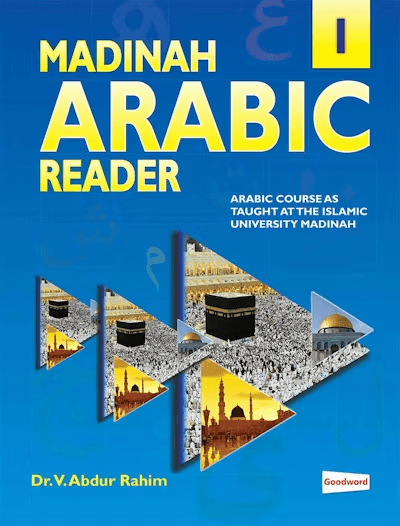
  • Madinah Arabic Reader, Book 1 through Book 8
  • Followed by A Commentary on al-Ājrūmiyyah, in English

What free content misses

A free course can teach you that the mudāf ilayh takes a kasra. It can't tell you that you specifically keep putting a fatḥah there instead — until that becomes the way you read, permanently.

Monthly subscription · solid Qur'an reading required

Step 4For staying fluent afterward

Qur'an Revision & Fluency

For students who've memorised, and want to keep it — and read it fluently.

  • 30-minute sessions, weekly or more, focused on revision technique
  • A clear Juz-by-Juz revision plan
  • Time-stamped corrections on your recordings

What free content misses

Practicing alone doesn't catch drift — the small errors that creep into memorised recitation over months without anyone there to notice they've crept in.

Monthly subscription

Most students take one path at a time — but if you'd like to combine two or more, we're happy to arrange a single personalised rate for both.

Tell us what you need

Get your own plan, personally quoted.


Tell us what you want and how it fits your budget — we'll message you back with a plan built around that, not a number pulled from a price list.

What do you want to work on?

Still not sure which one? Take the full quiz instead — it matches you by level, not by name.

Whatever you type here goes straight to us, in your own words — not into a calculation.

Your plan

Qaidah An-Nooraniyah

2 lessons a week · 30 min each

Message for my rate

Genuinely tight budget? Say so — message us directly and we'll find what actually works, rather than guess from a form.

Why we teach Arabic too

Reciting it is the beginning. Understanding it is the point.


Learning to recite beautifully is a real achievement, and it comes first for a reason — fluent reading makes everything after it easier. But recitation was never meant to be the finish line. Allāh sent this Book down in Arabic so it could be understood, and a bond built only on sound is not complete. Understanding the meaning is the other half.

You can't connect to what you can't understand.

That's why Arabic isn't an optional extra here, or a separate course sold alongside. It's the second half of the same journey — the same classical path, taught in the same order students have followed for centuries: the Madinah Arabic Reader across eight books, then al-Ājrūmiyyah. Not conversational Arabic. The Arabic that opens the Book.

If any of this is familiar

Standing in prayer, reciting words you can't quite hold on to.

Tarawih, night after night, catching maybe a word here and there.

Making du'ā in English because the Arabic never became yours.

None of it means your faith is lacking. It means you have not yet learned the Arabic that would let you understand it fully.

See how the Arabic track works →
The books you'll actually study

A named curriculum, not a vague syllabus.


You should know exactly what you're working through before you start. These are the same texts taught in classical institutions — studied in order, at your pace, with someone taking you through them page by page.

Stage 1

القاعدة النورانية

Qā'idah An-Nūrāniyyah

Before the Reader begins

The letters, their sounds, and joining them into words. Where every beginner starts, whatever their age.

Stage 2

دروس اللغة العربية

Madinah Arabic Reader

Books 1 – 8

The core of the Arabic track. Eight books, worked through in order — vocabulary, grammar and reading built up gradually rather than all at once.

Stage 3

الآجرومية

Al-Ājrūmiyyah

With commentary

The classical primer of Arabic grammar, taken up once the Reader is complete. Studied with a commentary, the way it has always been taught.

Qur'an, Tajweed and Hifdh run alongside this on their own track — see the full programme breakdown for how the two fit together.

From a real lesson

One rule. Half the Qur'an unlocked.


You can sound out the letters. You've probably been able to for years. But sounding out isn't understanding — and somewhere along the way, you stopped expecting to.

Every word in the Qur'an is doing something to the word next to it. Ayman wasn't shown what, either — until Lesson Five.

Ayman — Germany, on Lesson Five, unscripted.

Three of the ten lessons

01
هٰذا — "This"

Pointing at something and naming it. No "is," no "a" — Arabic sentences start bare.

Trip-up: The indefinite ending (tanwīn) is barely marked in normal print, so learners get used to nouns "sounding finished" without it — and can't hear it later when it matters.

05
Idāfa — how Arabic shows possession
Ayman's lesson

“Muhammad’s book” — no apostrophe, no “of,” just word order and a vowel change. Behind a large share of Qur'anic phrasing.

Trip-up: The required case ending on the second word is almost never printed with vowel marks, so students often don't know there's a rule to get right — until someone listens and hears them get it wrong.

09
Adjectives as the whole sentence

“The book is old,” not “an old book” — a shift in definiteness that changes what the sentence is doing.

Trip-up: Confusing "an old book" with "the book is old" — they look almost identical on the page.

Lessons 2, 3, 4, 6, 7, 8 & 10 are in the Roadmap below.

A fair question

"Why not just use the free ones?"

Free video courses of this exact book exist. They're genuinely good — same material, explained properly, at no cost. If you're someone who reliably finishes what they start alone, they might be all you need.

Most people who start a free video series don't finish it. Not because the material gets harder — because life gets in the way, and no one is expecting them on Tuesday at 6pm.

And a video can teach you that the mudāf ilayh takes a kasra. It can't tell you that you specifically keep putting a fatḥah there instead — until that becomes the way you read, permanently.

Same book. Someone checking your Idāfa in real time.

This is what that actually looks like — a real exercise, marked right and wrong as it happens. Not staged for the camera.

Free — sent to your WhatsApp

Your Book 1 Roadmap

All ten lessons, mapped — what each one covers and the specific place students trip without noticing. The same starting point Ayman had.

So we can route you to the right person to follow up.

We send the PDF once. You can ask us to remove your number any time.

One Teacher · Since 2018

معهد الشريف

As-Sharif
Institute

Qur'an · Tajweed · Arabic

Online · 1-on-1
Who you'll be learning from

Certified to teach it — not just to know it.


That distinction runs through everything here. Plenty of people have memorised the Qur'an, know the rules of tajweed, or speak Arabic fluently. Far fewer have been formally examined and certified to actually teach each one — which is the difference between someone who's good at something and someone trained to hand it to you.

Hafidh isn't a title Faris gave himself. It's a certified qualification — examined and scored 90% (Excellent) by an accredited body, the same way a diploma is marked. That matters when you're trusting someone with your own recitation: an examiner has already checked the standard he teaches to, before you ever start your first lesson.

It's the same story with Arabic. Faris's diploma from Umm Al-Qura is specifically in teaching Arabic to non-native speakers — a different discipline from simply knowing the language. Plenty of people speak Arabic fluently. Far fewer have been trained in how to hand it to someone who doesn't.

It shows in the choices. The Madinah Arabic Reader isn't used here out of habit — it's chosen because its illustrated, incremental design is what actually works for a beginner. Explanations are kept in plain, simple English by default — no idioms, no assumed fluency — so a student in Europe, wherever English is their second or third language, follows just as easily as a native speaker would. Urdu or Hindi where that helps further, so nobody is left guessing at an explanation on top of guessing at the Arabic.

You can see this in practice, not just take it on trust. In his own 140+ video series, Faris takes Sheikh Salem At-Taweel's dawah stories — drawn from five decades of preaching — and distills each one: summarising the key points, cutting what isn't essential, and contextualising it so the message lands clearly. That same skill — knowing what to keep, what to cut, and how to make it land — is what makes a lesson actually work. Watch the series →

Qur'an

Taught by a Hafidh who completed the memorisation himself and sat the examination for it — so the corrections come from someone who has walked the whole road.

Tajweed

Certified to teach Qaida An-Nooraniyah, the method built precisely for getting the letters right before anything else is layered on top.

Arabic

Madinah Arabic Reader through all eight books, then al-Ājrūmiyyah — the same classical sequence, taught by someone trained in delivering it to non-native speakers.

Led by

Ustādh Faris Sharif

Ustādh Faris Sharif

Fluent in Arabic, English, Urdu and Hindi, Faris works with students from their very first letter through to full memorisation. Teaching follows the Qur'an and Sunnah, upon the understanding of the Salaf.

“I'd rather you truly own one page than rush through ten. The Qur'an isn't a race.”

— Ustādh Faris Sharif

When a student stumbles, the question isn't just what they got wrong — it's why. A shaky word is often a vocabulary gap, a lost place, or last week's page not fully settled. Find the real cause, and the mistake usually doesn't come back.

  • Completed Intermediate studies — Dar Al-Hadith Al-Khairiyah, Makkah
  • Hafidh of the Qur'an — certified, 90% (Excellent)
  • Certified to teach Qaida An-Nooraniyah — Furqan Group for Education & IT
  • Diploma in Arabic Language Teaching for Non-Native Speakers — Umm Al-Qura University, Makkah
  • Bachelor's student, Faculty of Sharī'ah, distance learning — Islamic University of Madinah

A teacher's chain matters as much as certificates. Before any of the credentials above, there were years of it — memorisation sessions at Masjid Al-Aziziyah, under more than one teacher, more than can be named individually and given fair credit each. That is where this actually began.

2016

Began at Dar Al-Hadith

Years of memorisation, under more than one teacher, in Makkah.

2018

Began teaching

As-Sharif Institute formalised what had already begun.

2020

Certified to teach

Qaida An-Nooraniyah, Furqan Group for Education & IT.

In his own words

How we teach

One-to-one

Just you and your teacher.

Flexible times

UK, US & EU friendly.

Beginners welcome

Start at zero, no shame.

Properly corrected

Every lesson, live.

Wondering where you'd fit in? Answer a few questions and we'll place you properly.

Real results

What students say, in their own words.


Shared directly by students, with their permission.

Real students, across 6countries — every outcome below is a student's own words, not a summary.

Finished Book 1 — Madinah Arabic Reader

I just finished the first book of Madinah Arabic Reader with Ustadh Faris, and it went really well. He explained things clearly and made sure everything was easy to follow.
Hamza Sohaib · USA

Read Al-Fātiḥah and a page of Al-Baqarah, on his own

Last night around 2 AM, I grabbed my Arabic Qur'an and subhannallah with already what you have taught me I was able to read surah al Fatiha and a page of Surah al Baqarah, slowly but I got there in the end.
Ismael (Flavio) · UK · revert

Recitation and memorisation both strengthened

I really appreciate the lessons given by Ustadh, he explains very well and simply the concepts of tajweed, he helped me a lot to better my recitation and to strengthen my memorization.
Mansour · France · revert

Now reads the Qur'an with real understanding

Now when I read the Qur'an, I understand much more of it. Even when I read normal text, I find myself understanding so much better. Truly the best lessons I've ever had in Arabic.
Amir Niazi · Germany

Finished Sūrah al-Kahf — his first time ever

After these lessons I have been able to finish Sūrah al-Kahf for the first time in my life. I was never able to get close to finishing it. And my relationship with the Qur'an has gotten way stronger.
Berkay · Netherlands

His son's tajweed has improved

My honest review about the lessons so far is that Zakariya has improved in his tajweed, Alhamdulillah.
Abu Zakariya Hussain Said · UK · parent

Says the teaching style is ideal for beginners

I really think these classes are helping me learn Arabic properly. The teacher always asks if I'm understanding, and asks me questions which jog my memory on things I can't remember. Overall, his style of teaching is very beneficial for beginners trying to learn.
Muhammad Faateh · USA

Reading with real confidence, starting from zero

I feel more confident with reading now. I want to get to the point where I don't struggle at all, and with you, Alhamdulillah, I think I'll get there. So far, so good.
Jibreal Alsubari · UK

As they were sent

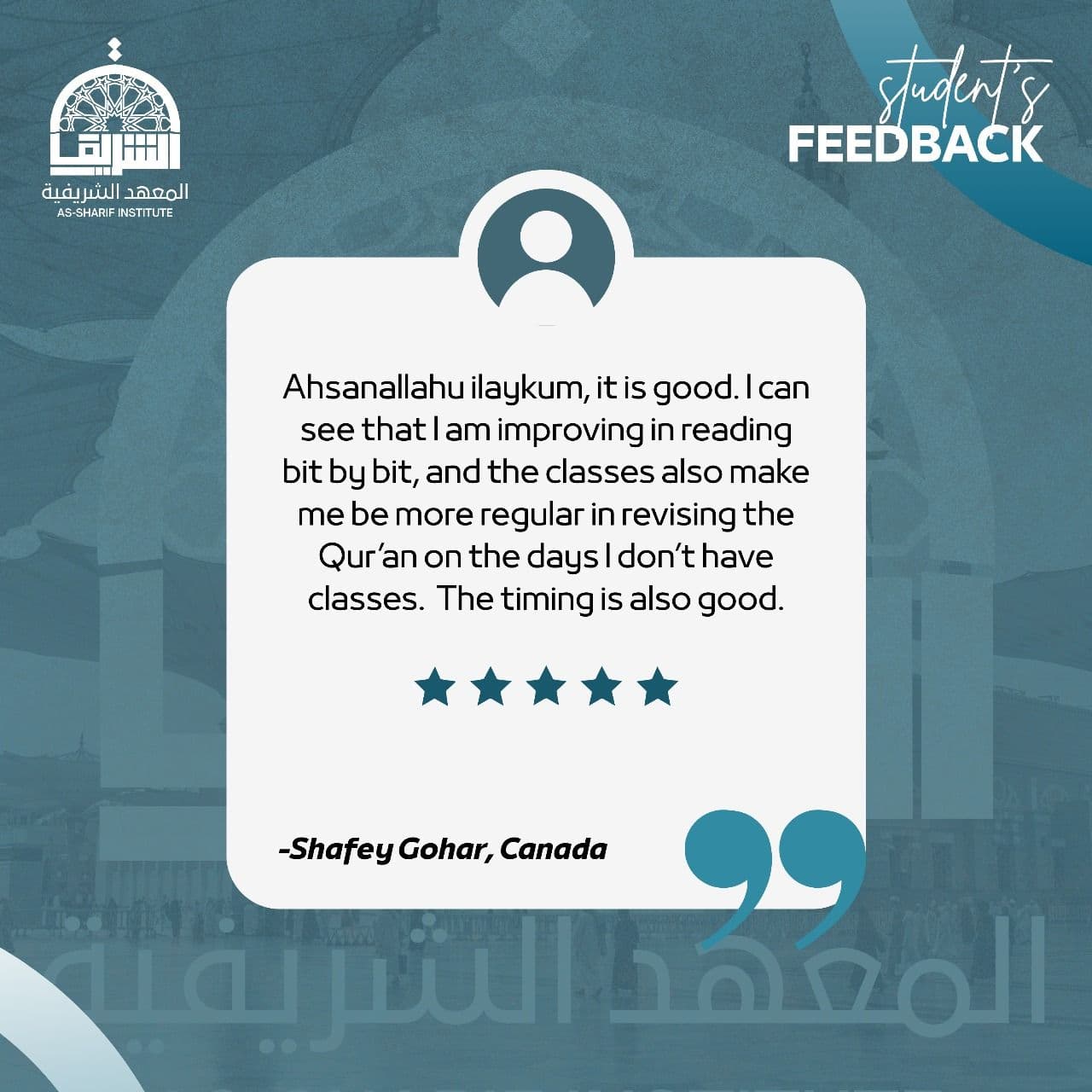
Feedback from Shafey Gohar, Canada for As-Sharif Institute
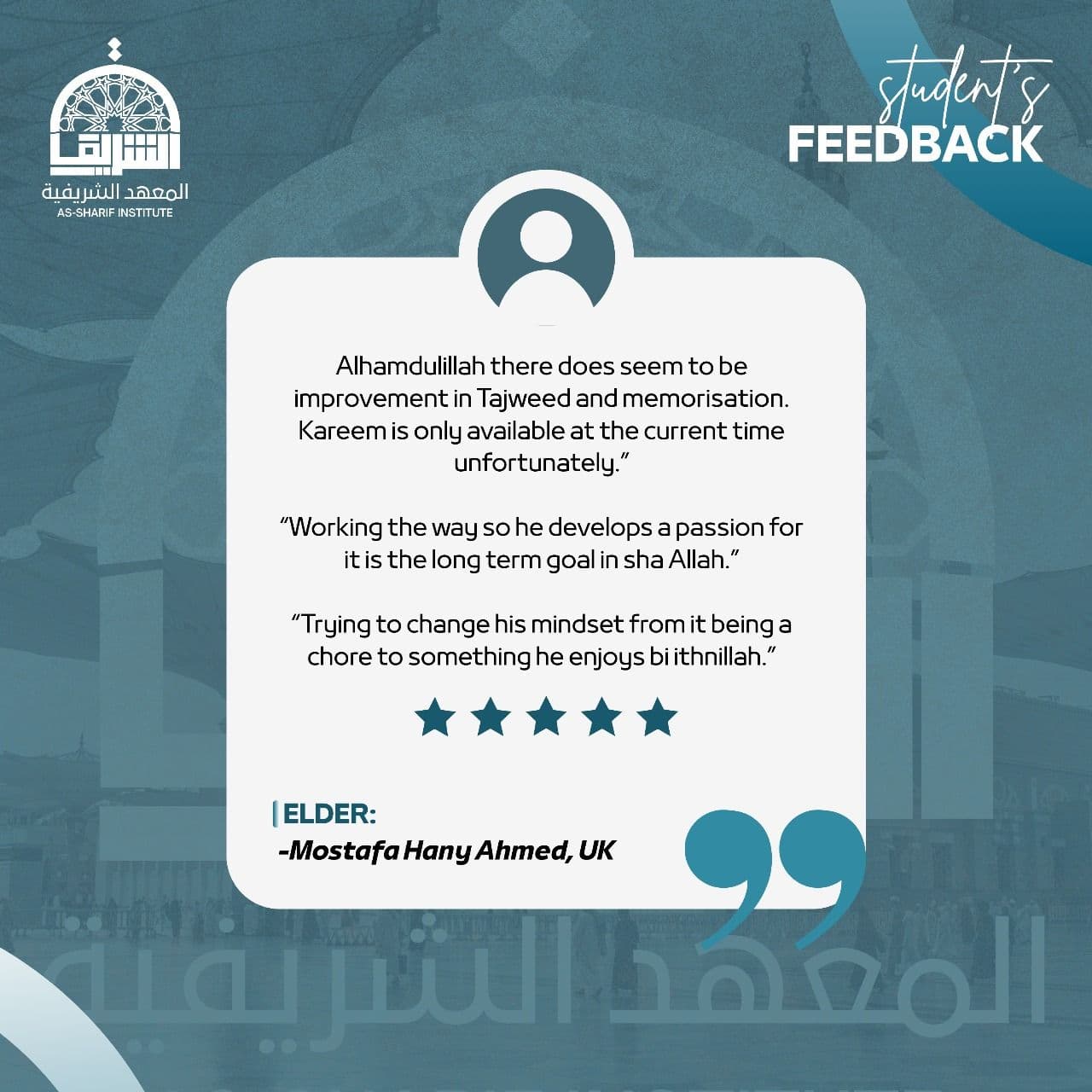
Feedback from Mostafa Hany Ahmed, UK (parent) for As-Sharif Institute

Want to be next?

Find your plan

Not ready yet? Start with the free booklet

Why one-to-one

Discipline is not the problem.


Most people who stall with the Qur'an aren't lazy. They downloaded the app, bought the mushaf, made the intention, and meant every word of it. Then a week got busy, and there was nobody who noticed they'd stopped.

That's not a character flaw. It's what happens to everyone without a person on the other side of it. Learning the Qur'an has never been a solo activity — it was passed from a teacher's voice to a student's ear, in a set place, at a set time, with someone waiting.

“No matter how حريصyou are — however eager, however sincere — if you don't have someone expecting you, it doesn't hold in the long term.”

— Ustādh Faris Sharif

I say that as someone who sat in madrasa five days a week, three hours a day, for years. Even then, what kept it going was never willpower on its own — it was a teacher who noticed when I didn't show up.

A set time, every week

Not whenever you get around to it. A slot in your week that already has your name on it.

Homework that gets checked

Sent after every lesson, reviewed at the next one. Nothing disappears into the gap between sessions.

Someone who notices

If you go quiet, you'll hear from us. That's the part an app has never been able to replace.

Said plainly, not as a selling point

What we don't do.


Trust isn't a feature to advertise \u2014 it's tested by what happens when nobody's watching. Here's what that actually looks like here, named plainly instead of left for you to hope is true.

No manufactured urgency

One teacher genuinely has a limited number of students he can take at once — that's stated as what it actually is, not dressed up as a countdown.

No discount games

The rate you're quoted isn't inflated so it can be ‘reduced’ for you. If there's a real constraint, that's a personal conversation — never a marketing tactic.

Every testimonial is real, and consented

Named students, their own words, permission asked before anything is shared — on camera, in writing, every time.

No automated chasing

You won't get bulk WhatsApp follow-ups. If you don't reply, that's respected, not pursued.

Free means free

The guide, the Tajweed Companion sample, the roadmap — nothing is a bait-and-switch for a harder pitch later.

How lessons work

From first salaam to first lesson.


Every plan is personal, so there's no fixed price. We agree it together before anything begins.

  1. You reach out

    Answer a few quick questions, or message us on WhatsApp directly — whichever you prefer.

  2. We talk it through

    Your goals, your level, and how often you'd like to learn.

  3. We agree your plan

    A plan shaped around you. Nothing starts until you're happy with it.

  4. We sort out payment

    The method that suits you best. Monthly, if that's easier. A genuine constraint is a conversation, not a negotiation.

  5. Your lessons begin

    One teacher, just for you. Online, one-to-one, on a platform you know.

Let's find your plan

A few quick questions.


A few quick questions helps us match you with the right plan — and reply at the right pace.

Most people who mean to start never do — not for lack of sincerity, but because there was never a set time and no one expecting them. Six questions is where that changes.

Question 1 of 6

A little about you

A glimpse from page one

A familiar evening.


It's almost midnight. The house is finally quiet. You're lying in bed with your phone, halfway through a video you won't remember tomorrow.

Your mushaf is on the shelf across the room. Same place it's been since last Ramadan. You scroll past a clip of a qari reciting Surah Ar-Rahman. For a few seconds, something tightens in your chest. Not quite guilt. More like seeing an old friend you've been avoiding.

This isn't a faith problem. You still pray. You still believe. The bond is still there. It's just buried under tabs and deadlines and group chats, and a world that doesn't slow down for anything holy.

Nobody built this bond for you here. There is no adhan calling from a nearby mosque, no grandfather reading Qur'an on the porch each evening, nothing around you that naturally pulls you back to the Book. In the West, you have to build that bond yourself, on purpose.

The longer we wait, the harder it gets to come back.

But here is the mercy. Allah is not counting your distance. He is waiting for your return.

وَإِذَا سَأَلَكَ عِبَادِي عَنِّي فَإِنِّي قَرِيبٌ

And when My servants ask you concerning Me, indeed I am near.

Surah Al-Baqarah · 2:186

The booklet keeps going from here. Six more pages. The four reasons we put it off, the five steps to reconnecting with the Qur'an, and a 7-day starter.

What's inside the booklet

A short read. Then a plan you can start.


It's a 12-minute read. Open it tonight, on your phone. By tomorrow you'll have a clear path to start.

I.See

Where you actually are

Why the Qur'an feels far, even when you still believe. What a busy life is quietly costing you. And why this isn't a faith problem.

  • Why this isn't a faith problem
  • Something no app or playlist can fix
  • Why nothing else can replace this Book
Pages 02 · 03
II.Believe

Four reasons we put it off

The four things we tell ourselves to put it off, and why none of them actually hold up.

  • Why putting it off never works
  • Why none of these reasons hold up
  • Real proof from the Qur'an and Sunnah
Page 04
III.Act

Five steps, in order

A short, simple way back. The same path we walk every new student through. Includes a 7-day starter sheet you can print.

  • The single most important first step
  • A system that doesn't rely on willpower
  • A 7-day starter, ready to print
Pages 05 · 07

The whole booklet · free

You can read all 7 pages tonight.

Get it below — we'll WhatsApp you the PDF.

For students already reading Qur'an

Already reading? Perfect your tajweed.


The Tajweed Companion is the actual curriculum reference our students use — every core rule, worked in full, with real Qur'anic examples and visual rule-maps instead of dense tables. Not a taster. The real thing.

It also shows you exactly where the rules alone run out — 14 real, documented cases in Hafs's recitation that no written guide can fully teach. That's not a gap we're hiding. It's the honest reason this is a companion to a teacher, not a replacement for one.

Noon Saakinah & Tanween
Meem Saakinah
Qalqalah — the echo letters
Madd — every lengthening rule
Articulation points, in full
Waqf & Ibtidaa — stopping rules
Read a free sample — first section, no signup

Get the Tajweed Companion

Leave your details and we'll send it straight to your WhatsApp — and talk through where you actually are with your recitation.

So we can route you to the right person to follow up.

We send the PDF once. You can ask us to remove your number any time.

Don't wait for Ramadan

Has the time not come?


Every year that passes is a year your children didn't see you reading.

A year of du'as made in a language you didn't fully understand.

A year the Qur'an stayed on the shelf while everything else (your phone, your work, your worries) got the best of you.

A year Allah was near, and we were busy.

We don't get those years back.

أَلَمْ يَأْنِ لِلَّذِينَ آمَنُوا أَن تَخْشَعَ قُلُوبُهُمْ لِذِكْرِ اللَّهِ وَمَا نَزَلَ مِنَ الْحَقِّ

Has the time not come for those who believe, that their hearts should be humbled at the remembrance of Allah and what has come down of the truth?

Surah Al-Hadid · 57:16

This ayah was sent down for believers who had grown distant. Allah is asking us.

Has the time not come? It has.

Not next Ramadan. Not when life calms down. Not when your Arabic is better.

Tomorrow. Five ayat. The same time. With a teacher who is expecting you.

Step 1

Get the booklet on WhatsApp.

We'll send you the 7-page guide. Read it tonight, on your phone.

So we can route you to the right person to follow up.

We send the PDF once. You can ask us to remove your number any time.

Already know you want lessons? Find your plan directly →